
Ensuring the uniform mixing of rubber in a Rubber Open Mill is a crucial process in the rubber manufacturing industry. As a supplier of Rubber Open Mills, I understand the significance of this step and the challenges that manufacturers often face. In this blog, I will share some key strategies and considerations to achieve optimal rubber mixing results.
Understanding the Basics of Rubber Open Mills
Before delving into the techniques for uniform mixing, it's essential to have a clear understanding of how a Rubber Open Mill works. A Rubber Open Mill consists of two parallel rolls that rotate in opposite directions at different speeds. The rubber compound is fed between the rolls, and the friction and shear forces generated by the rotating rolls help to mix the ingredients uniformly.
The gap between the rolls, known as the nip, can be adjusted to control the thickness of the rubber sheet and the intensity of the mixing process. The speed ratio between the two rolls also plays a crucial role in determining the shear forces applied to the rubber compound.
Preparing the Rubber Compound
Proper preparation of the rubber compound is the first step towards achieving uniform mixing. This involves selecting the right raw materials, ensuring their quality, and pre - blending them if necessary.
- Raw Material Selection: Choose high - quality rubber polymers, fillers, plasticizers, and other additives. The quality of the raw materials directly affects the final properties of the rubber product. For example, using a consistent grade of carbon black as a filler can ensure uniform reinforcement of the rubber.
- Pre - Blending: Some additives may need to be pre - blended before being added to the Rubber Open Mill. For instance, liquid plasticizers can be mixed with a small amount of rubber powder to form a more homogeneous mixture, which is easier to incorporate into the main rubber compound.
Adjusting the Mill Parameters
The settings of the Rubber Open Mill have a significant impact on the mixing quality. Here are some important parameters to consider:
- Roll Temperature: Maintaining the appropriate roll temperature is crucial. Rubber has a specific temperature range within which it exhibits optimal plasticity. If the rolls are too cold, the rubber may not flow properly, resulting in poor mixing. On the other hand, if the rolls are too hot, the rubber may start to degrade. For most general - purpose rubbers, a roll temperature between 40°C and 60°C is often recommended.
- Nip Gap: The nip gap should be adjusted according to the type of rubber and the desired mixing intensity. A smaller nip gap creates higher shear forces, which can help to break up agglomerates and disperse additives more effectively. However, if the nip gap is too small, it may cause excessive heat generation and uneven mixing. Start with a relatively large nip gap and gradually reduce it as the mixing progresses.
- Roll Speed and Speed Ratio: The speed of the rolls and the speed ratio between them affect the shear forces applied to the rubber. A higher speed ratio usually results in more intense mixing. For example, a speed ratio of 1:1.2 to 1:1.4 is commonly used in many rubber mixing applications.
Mixing Techniques
In addition to parameter adjustment, using the right mixing techniques can further improve the uniformity of the rubber mixture.
- Cutting and Folding: During the mixing process, periodically cut the rubber sheet from the sides of the rolls and fold it back into the nip. This helps to redistribute the rubber and ensure that all parts of the compound are exposed to the mixing action. Cutting and folding can be done manually or with the help of automated cutting devices.
- Multiple Passes: Running the rubber compound through the mill multiple times can enhance the mixing quality. Each pass allows for further dispersion of additives and better homogenization of the rubber. However, be careful not to over - mix, as this can lead to heat build - up and degradation of the rubber.
Monitoring and Quality Control
Continuous monitoring of the mixing process is essential to ensure uniform mixing. Here are some methods for monitoring and quality control:
- Visual Inspection: Regularly check the appearance of the rubber sheet. A uniform color and texture indicate good mixing. Look for any signs of agglomerates, streaks, or unevenness.
- Physical Testing: Take samples of the mixed rubber and perform physical tests such as hardness, tensile strength, and elongation at break. These tests can provide quantitative data on the quality of the mixing. If the test results deviate from the expected values, adjustments can be made to the mixing process.
Equipment Maintenance
Proper maintenance of the Rubber Open Mill is vital for consistent performance and uniform mixing.
- Roll Maintenance: Keep the rolls clean and free from any debris or buildup. Regularly inspect the rolls for wear and tear, and replace them if necessary. A smooth and even roll surface is essential for uniform mixing.
- Lubrication and Calibration: Ensure that all moving parts of the mill are properly lubricated to reduce friction and prevent mechanical failures. Calibrate the mill regularly to maintain accurate control of the roll temperature, nip gap, and speed.
As a supplier of Rubber Open Mills, we offer a range of products that are designed to meet the diverse needs of the rubber manufacturing industry. Our Xk - 160 Two Roll Mill is a popular choice for small - scale production and research applications. It provides precise control over the mixing parameters and ensures high - quality mixing results.
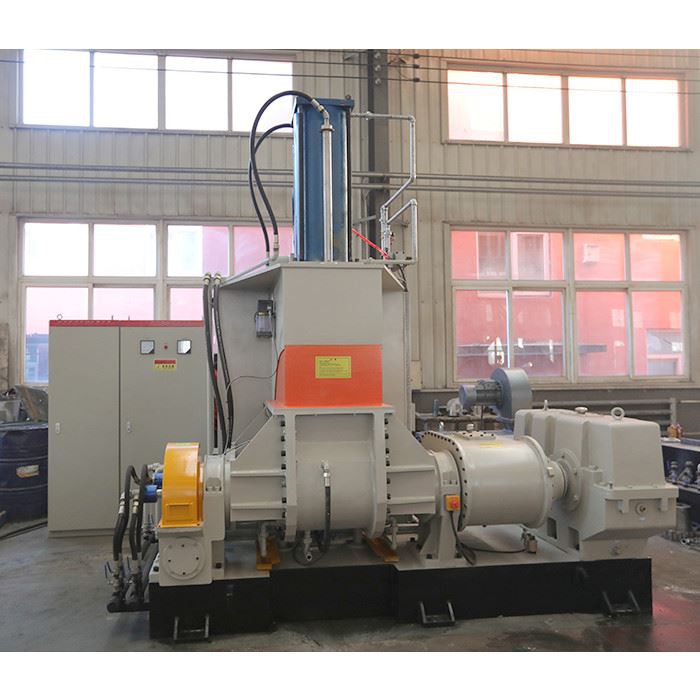

In addition, we also offer Kneader Machine For Rubber Mixing, which can be used in combination with the Rubber Open Mill for more complex mixing tasks. The kneader can pre - mix the rubber compound and break down large agglomerates, making it easier to achieve uniform mixing in the open mill.
After the mixing process, our Batch Off equipment can be used to cool and wind up the mixed rubber sheet, ensuring a smooth and efficient production process.
If you are looking for high - quality Rubber Open Mills and related equipment, we are here to help. Our team of experts can provide you with professional advice on equipment selection, operation, and maintenance. We are committed to helping you achieve the best possible rubber mixing results and improve the quality of your rubber products. Contact us today to start a purchase negotiation and take your rubber manufacturing to the next level.
References
- Gumede, N., & Muzenda, M. (2019). Influence of mixing parameters on the properties of natural rubber compounds. Polymer Testing, 76, 106029.
- Isayev, A. I., & Kiss, A. D. (2013). Mixing and Compounding of Polymers. John Wiley & Sons.
- van Ooij, W. J. (2006). Rubber Technology Handbook. Hanser Publishers.