
Can a rubber mixer be used for pre - mixing rubber ingredients?
As a seasoned supplier of rubber mixers, I often encounter inquiries regarding the diverse applications of our equipment. One question that frequently arises is whether a rubber mixer can be effectively used for pre - mixing rubber ingredients. In this blog post, I'll delve into this topic, exploring the feasibility, benefits, and considerations of using a rubber mixer for pre - mixing.
The Function of a Rubber Mixer
A rubber mixer is a specialized piece of equipment designed to blend various rubber compounds and additives uniformly. It operates by applying mechanical force to break down and disperse the ingredients, ensuring a homogenous mixture. The most common types of rubber mixers include internal mixers and open mills. Internal mixers, such as Banbury mixers, are enclosed chambers where the rubber and additives are mixed under high pressure and temperature. Open mills, on the other hand, consist of two counter - rotating rolls that shear and mix the rubber.
Feasibility of Pre - mixing with a Rubber Mixer
The short answer is yes, a rubber mixer can be used for pre - mixing rubber ingredients. Pre - mixing is an essential step in the rubber manufacturing process as it helps to distribute the additives evenly, reduces the overall mixing time, and improves the quality of the final product.
When using a rubber mixer for pre - mixing, the operator can add the rubber base and various additives such as fillers, plasticizers, accelerators, and antioxidants in a controlled manner. The mixer then uses its mechanical action to break down the agglomerates of the additives and disperse them throughout the rubber matrix. For example, in an internal mixer, the rotors rotate at high speeds, generating intense shear forces that effectively mix the ingredients.
Benefits of Pre - mixing with a Rubber Mixer
- Improved Dispersion: Pre - mixing ensures that the additives are evenly distributed within the rubber. This leads to a more consistent product with uniform physical and chemical properties. For instance, better dispersion of fillers can enhance the strength and hardness of the rubber, while uniform distribution of accelerators can improve the curing process.
- Reduced Mixing Time: By pre - mixing the ingredients, the subsequent mixing steps can be completed more quickly. This is because the additives are already partially dispersed, reducing the time required for the mixer to achieve a homogenous mixture. This not only increases the production efficiency but also reduces energy consumption.
- Enhanced Product Quality: The uniform distribution of additives achieved through pre - mixing results in a higher - quality final product. The rubber will have better resistance to aging, wear, and environmental factors, making it more suitable for a wide range of applications.
Considerations when Using a Rubber Mixer for Pre - mixing
- Additive Compatibility: It's crucial to ensure that the additives used in the pre - mixing process are compatible with each other and the rubber base. Incompatible additives can cause phase separation, poor dispersion, or chemical reactions that may affect the quality of the final product.
- Mixing Parameters: The operator needs to carefully control the mixing parameters such as temperature, speed, and time. For example, excessive temperature during pre - mixing can cause premature curing of the rubber or degradation of the additives. Similarly, incorrect mixing speed may not provide sufficient shear force for proper dispersion.
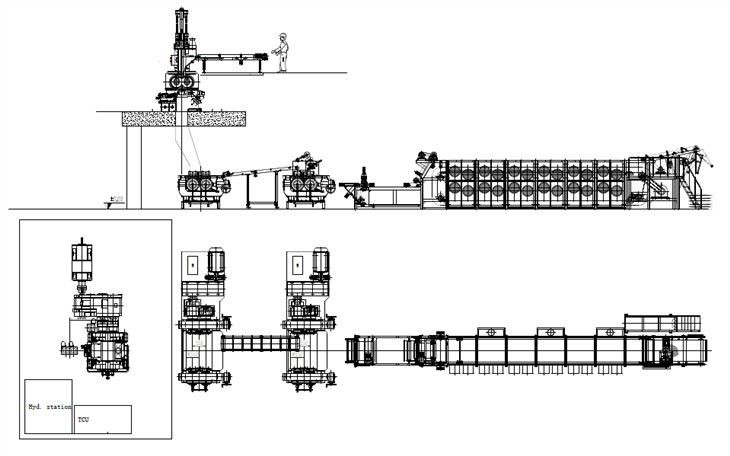
- Equipment Selection: Different types of rubber mixers have different capabilities and are suitable for different pre - mixing requirements. For small - scale production or laboratory testing, a Lab Open Mill may be sufficient. However, for large - scale industrial production, a more powerful internal mixer or a Rubber Mixing Line may be necessary.
Complementary Equipment in the Rubber Mixing Process
In addition to the rubber mixer, other equipment can play a crucial role in the pre - mixing and overall rubber manufacturing process. A Batch Off Cooling Machine is often used after the mixing process to cool the rubber compound. This helps to prevent premature curing and maintain the quality of the rubber. The cooled rubber can then be further processed into various products.
Conclusion
In conclusion, a rubber mixer can indeed be used for pre - mixing rubber ingredients, offering numerous benefits such as improved dispersion, reduced mixing time, and enhanced product quality. However, it's important to consider factors such as additive compatibility, mixing parameters, and equipment selection to ensure a successful pre - mixing process.
If you are in the rubber manufacturing industry and are looking for high - quality rubber mixers or related equipment for pre - mixing and other processes, we are here to help. We have a wide range of products that can meet your specific needs. Whether you are a small - scale manufacturer or a large - scale industrial enterprise, our team of experts can provide you with professional advice and solutions. Contact us today to start a discussion about your requirements and explore how our equipment can improve your rubber production process.

References
- "Rubber Technology: Compounding and Testing for Performance" by Michael Morton
- "Handbook of Rubber Technology" edited by Klaus G. K. Bauwens - Crows