
Hey there! As a supplier of rubber mixing machines, I often get asked about various technical details of our products. One question that pops up quite frequently is, "What is the width of a rubber mixing machine?" Well, let's dive right in and explore this topic.

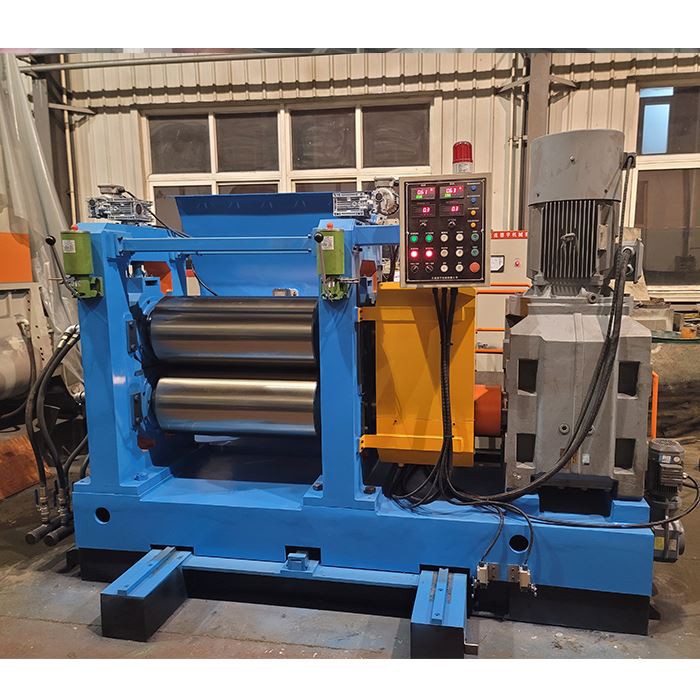
Understanding the Basics of Rubber Mixing Machines
First off, a rubber mixing machine is a crucial piece of equipment in the rubber manufacturing industry. It's used to blend different rubber compounds, additives, and fillers to create a homogeneous mixture with the desired properties. There are different types of rubber mixing machines, such as two - roll mills, internal mixers, and extruders, each with its own unique features and applications.
The width of a rubber mixing machine is an important parameter that can significantly affect its performance and the quality of the rubber products it produces. In simple terms, the width refers to the horizontal dimension of the working area of the machine. For example, in a two - roll mill, the width is the length of the rolls.
Why Does the Width Matter?
The width of a rubber mixing machine can have several implications.
Production Capacity
A wider machine generally means a higher production capacity. If you have a rubber mixing machine with a larger width, you can process more rubber material at once. This is especially important for large - scale rubber manufacturing plants where high - volume production is a must. For instance, a factory that produces tires or rubber hoses might require a wide rubber mixing machine to meet the market demand.
Mixing Quality
The width can also impact the mixing quality. A wider machine allows for a more even distribution of the rubber compound across the working area. This helps in achieving a more uniform mixture, which is essential for producing high - quality rubber products. Uneven mixing can lead to issues such as inconsistent hardness, color variations, and reduced mechanical properties in the final product.
Compatibility with Different Rubber Compounds
Different rubber compounds have different physical properties, such as viscosity and elasticity. A machine with an appropriate width can handle a wider range of rubber compounds more effectively. For example, a wider machine might be better suited for processing highly viscous rubber compounds as it provides more space for the material to flow and mix.
Common Widths of Rubber Mixing Machines
The width of rubber mixing machines can vary widely depending on the type and application.
Two - Roll Mills
Two - roll mills are one of the most commonly used types of rubber mixing machines. They come in a range of widths, typically starting from around 100 mm to over 1000 mm. A smaller two - roll mill with a width of, say, 100 - 200 mm, is often used in laboratories or small - scale workshops for research and development or small - batch production. On the other hand, large - scale industrial two - roll mills can have widths of 600 mm or more. For example, our Xk - 160 Two Roll Mill has a specific width that is optimized for efficient mixing and production.
Internal Mixers
Internal mixers are another type of rubber mixing machine. They are known for their high - intensity mixing capabilities. The width of internal mixers is usually related to the size of the mixing chamber. The width can range from a few hundred millimeters to over a meter, depending on the capacity of the machine. Larger internal mixers with wider chambers are used in high - volume production facilities.
Extruders
Extruders are used to shape the rubber compound into various profiles. The width of an extruder is often determined by the width of the die, which is the part of the machine that gives the rubber its final shape. Extruders can have a wide range of widths, depending on the application. For example, a rubber extruder used to produce thin rubber sheets might have a relatively narrow width, while one used to produce wide rubber belts could have a much wider width. Our Rubber Extruder Sheet Preforming Machine is designed with a specific width to ensure precise and efficient preforming of rubber sheets.
Factors to Consider When Choosing the Width
When you're in the market for a rubber mixing machine, choosing the right width is crucial. Here are some factors to keep in mind:
Production Requirements
Consider your current and future production needs. If you're planning to expand your production in the future, it might be a good idea to invest in a wider machine. However, if you're just starting out or have a small - scale operation, a narrower machine might be more cost - effective.
Space Availability
The width of the machine also affects the amount of floor space it requires. Make sure you have enough space in your factory to accommodate the machine. You also need to consider the space for maintenance and operation around the machine.
Budget
Wider machines generally come with a higher price tag. You need to balance your budget with your production requirements. Sometimes, a slightly narrower machine might still meet your needs while being more affordable.
The Role of Width in the Overall Rubber Manufacturing Process
The width of a rubber mixing machine is just one piece of the puzzle in the rubber manufacturing process. It needs to be coordinated with other equipment in the production line. For example, a wide rubber mixing machine might need to be paired with a Batch Off Cooling Machine that can handle the large volume of mixed rubber. The cooling machine should have a width that is compatible with the output of the mixing machine to ensure efficient cooling and handling of the rubber compound.
Conclusion
So, to sum it up, the width of a rubber mixing machine is a critical factor that can impact production capacity, mixing quality, and compatibility with different rubber compounds. When choosing a rubber mixing machine, you need to carefully consider your production requirements, space availability, and budget. As a supplier, we offer a wide range of rubber mixing machines with different widths to meet the diverse needs of our customers.
If you're in the market for a rubber mixing machine and have questions about the width or any other technical details, don't hesitate to reach out. We're here to help you find the perfect machine for your business. Whether you're a small - scale workshop or a large - scale manufacturing plant, we have the expertise and products to support your rubber production needs. Let's have a chat and see how we can work together to take your rubber manufacturing to the next level.
References
- "Rubber Technology" by Maurice Morton
- "Handbook of Rubber Manufacture" by Werner Hofmann