
Temperature fluctuations can have a significant impact on a Rubber Batch Off Unit, a critical component in the rubber manufacturing process. As a supplier of Rubber Batch Off Units, I've witnessed firsthand how temperature variations can influence the performance, quality, and efficiency of these machines. In this blog, I'll delve into the effects of temperature fluctuations on a Rubber Batch Off Unit and discuss strategies to mitigate these impacts.
Understanding the Rubber Batch Off Unit
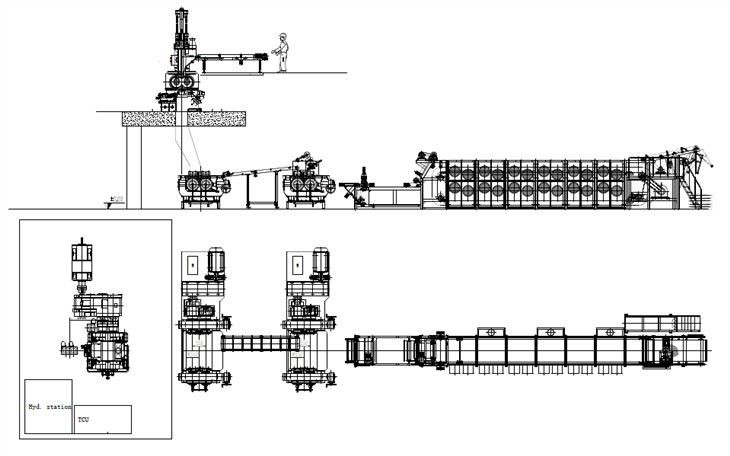
Before we explore the impact of temperature fluctuations, let's briefly understand what a Rubber Batch Off Unit does. A Rubber Batch Off Unit is an essential part of the Rubber Mixing Line. It is responsible for cooling and sheeting the rubber compound after it has been mixed in machines like the Rubber Kneader Machine or the Rubber Banbury Mixer. The unit takes the hot, viscous rubber compound and passes it through a series of rollers to form a continuous sheet of a specific thickness. This sheet is then cooled and wound onto a roll for further processing or storage.
Impact of Temperature Fluctuations on Rubber Batch Off Unit
1. Physical Properties of Rubber
Temperature fluctuations can significantly alter the physical properties of rubber. Rubber is a viscoelastic material, which means its behavior is a combination of viscous (fluid-like) and elastic (spring-like) characteristics. When the temperature rises, the rubber becomes more viscous and less elastic. This increased viscosity can make it more difficult for the Rubber Batch Off Unit to process the rubber. The rollers may experience more resistance, leading to increased energy consumption and potential wear and tear on the equipment.
Conversely, when the temperature drops, the rubber becomes more elastic and less viscous. This can cause the rubber to stick to the rollers, resulting in uneven sheeting and potential damage to the rubber sheet. The reduced viscosity can also lead to poor flow properties, making it challenging to form a continuous and uniform sheet.

2. Cooling Efficiency
The cooling process is a crucial function of the Rubber Batch Off Unit. Temperature fluctuations can disrupt the cooling efficiency of the unit. If the ambient temperature is too high, the cooling system may struggle to remove heat from the rubber sheet effectively. This can lead to a higher final temperature of the rubber sheet, which can affect its physical properties and storage stability.
On the other hand, if the ambient temperature is too low, the cooling rate may be too fast. This can cause internal stresses in the rubber sheet, leading to cracking or warping. The rapid cooling can also result in a hard outer layer forming on the rubber sheet, which can prevent further cooling of the inner layers.
3. Roller Performance
The rollers in a Rubber Batch Off Unit play a vital role in sheeting the rubber. Temperature fluctuations can affect the performance of these rollers. High temperatures can cause the rollers to expand, which can change the gap between the rollers and affect the thickness of the rubber sheet. This can lead to inconsistent product quality and increased scrap rates.
Low temperatures can cause the rollers to contract, which can also affect the gap between the rollers. Additionally, the reduced temperature can make the rollers more brittle, increasing the risk of cracking or damage.
4. Energy Consumption
Temperature fluctuations can also impact the energy consumption of the Rubber Batch Off Unit. When the temperature is high, the cooling system may need to work harder to remove heat from the rubber sheet, increasing energy consumption. Similarly, when the rubber is more viscous due to high temperatures, the rollers may require more power to rotate, further increasing energy usage.
On the other hand, low temperatures can cause the rubber to become more elastic, which can increase the resistance on the rollers and also lead to higher energy consumption.
Strategies to Mitigate the Impact of Temperature Fluctuations
1. Temperature Monitoring and Control
Implementing a comprehensive temperature monitoring system is essential to mitigate the impact of temperature fluctuations. This system should monitor the temperature of the rubber compound, the rollers, and the ambient environment. By continuously monitoring these temperatures, operators can adjust the settings of the Rubber Batch Off Unit in real-time to ensure optimal performance.
For example, if the temperature of the rubber compound is too high, the operator can increase the cooling water flow rate or adjust the speed of the rollers to reduce the processing time. Conversely, if the temperature is too low, the operator can adjust the heating elements or increase the ambient temperature to improve the flow properties of the rubber.
2. Insulation and Climate Control
Proper insulation of the Rubber Batch Off Unit and the surrounding area can help reduce the impact of temperature fluctuations. Insulation can prevent heat transfer between the unit and the environment, helping to maintain a more stable temperature inside the unit. Additionally, installing a climate control system in the production area can regulate the ambient temperature, ensuring a more consistent operating environment for the Rubber Batch Off Unit.
3. Roller Maintenance
Regular maintenance of the rollers is crucial to ensure optimal performance in the face of temperature fluctuations. This includes cleaning the rollers to prevent rubber buildup, lubricating the bearings to reduce friction, and inspecting the rollers for signs of wear and damage. By keeping the rollers in good condition, the Rubber Batch Off Unit can better handle temperature-induced changes in the rubber's physical properties.
Conclusion
Temperature fluctuations can have a profound impact on the performance, quality, and efficiency of a Rubber Batch Off Unit. As a supplier, I understand the challenges that manufacturers face in dealing with these fluctuations. By understanding the effects of temperature on rubber and implementing appropriate mitigation strategies, manufacturers can ensure the reliable operation of their Rubber Batch Off Units and produce high-quality rubber products.
If you're in the market for a Rubber Batch Off Unit or need advice on how to optimize the performance of your existing unit, I encourage you to reach out. Our team of experts is ready to assist you in finding the best solutions for your rubber manufacturing needs. Contact us today to start a discussion about your requirements and explore how our products can help you overcome the challenges posed by temperature fluctuations.
References
- "Rubber Technology: Compounding, Processing, and Testing of Rubber and Rubber Products" by Werner Hofmann.
- "Engineering Properties of Polymers and Polymer Composites" by George L. Choy.
- "Handbook of Elastomers" edited by A. K. Bhowmick and H. L. Stephens.