
Hey there! As a supplier of Rubber Banbury Mixers, I've seen firsthand how crucial the rotor shape is when it comes to the flow pattern of rubber inside these machines. Let's dig into what kind of effects different rotor shapes can have on the rubber flow.
First off, let's understand the basic role of a Rubber Banbury Mixer. It's a key piece of equipment in the rubber industry, used for mixing rubber compounds with various additives like fillers, plasticizers, and curing agents. The rotors in these mixers are the heart of the operation. They rotate inside the mixing chamber, generating shear forces that break down the rubber molecules and disperse the additives evenly throughout the rubber matrix.
Now, when it comes to rotor shapes, there are several common types, each with its own unique impact on the rubber flow pattern. One of the most well - known rotor shapes is the tangential rotor. Tangential rotors have a design where the rotors rotate in opposite directions but do not intermesh. This type of rotor creates a relatively gentle mixing action. The rubber in the mixing chamber flows in a more laminar pattern. It moves in layers around the rotors, and the mixing occurs mainly through the shearing forces generated at the interface between these layers.
The advantage of this laminar flow pattern is that it's less likely to cause excessive heat build - up in the rubber. Since the mixing is more gentle, the rubber is less stressed, which can be beneficial for heat - sensitive rubber compounds. However, the downside is that the mixing efficiency might be lower compared to other rotor shapes. It can take longer to achieve a uniform dispersion of additives in the rubber. If you're working with a large batch of rubber or a compound that requires a high degree of dispersion, the tangential rotor might not be the best choice.
On the other hand, we have the intermeshing rotors. These rotors rotate in opposite directions and intermesh with each other. This design creates a much more intense mixing action. The rubber flow pattern in a mixer with intermeshing rotors is highly turbulent. The intermeshing rotors cut through the rubber, creating a complex flow pattern with multiple eddies and vortices.
This turbulent flow pattern is great for achieving rapid and thorough mixing. The additives are quickly dispersed throughout the rubber matrix because the eddies and vortices constantly mix different parts of the rubber together. However, the intense mixing also generates a lot of heat. If the heat is not properly managed, it can lead to premature curing of the rubber or degradation of its properties. So, when using a mixer with intermeshing rotors, you need to have a good cooling system in place.
Another factor to consider is the shape of the rotor blades. Some rotors have straight blades, while others have helical blades. Rotors with helical blades create a more axial flow of the rubber in the mixing chamber. This means that the rubber not only moves around the rotors but also along the length of the mixing chamber. This axial flow can improve the overall mixing efficiency by ensuring that all parts of the rubber are evenly mixed.
In contrast, rotors with straight blades mainly create a radial flow of the rubber. The rubber moves in a more circular pattern around the rotors. While this can still provide effective mixing, the lack of axial flow might result in some parts of the rubber being mixed less effectively, especially in larger mixing chambers.
The choice of rotor shape also depends on the specific requirements of the rubber compound being mixed. For example, if you're mixing a soft and sticky rubber compound, a tangential rotor might be a better choice. The gentle mixing action can prevent the rubber from sticking to the rotors and the walls of the mixing chamber. On the other hand, if you're working with a hard and highly filled rubber compound, an intermeshing rotor with helical blades can provide the intense mixing needed to disperse the fillers evenly.
Now, let's talk about how these flow patterns can impact the quality of the final rubber product. A well - designed rotor shape that creates an optimal flow pattern can lead to a more uniform dispersion of additives in the rubber. This results in a rubber product with consistent physical and mechanical properties. For example, the hardness, elasticity, and tear strength of the rubber will be more uniform across the entire product.
On the flip side, if the rotor shape is not suitable for the rubber compound or the mixing requirements, it can lead to poor mixing quality. This can result in variations in the properties of the rubber product, which can cause problems during the manufacturing process or in the performance of the final product.
As a Rubber Banbury Mixer supplier, we understand the importance of choosing the right rotor shape for your specific needs. We offer a range of mixers with different rotor designs to cater to various rubber mixing requirements. Whether you need a gentle mixing action for heat - sensitive compounds or a more intense mixing for highly filled rubbers, we've got you covered.
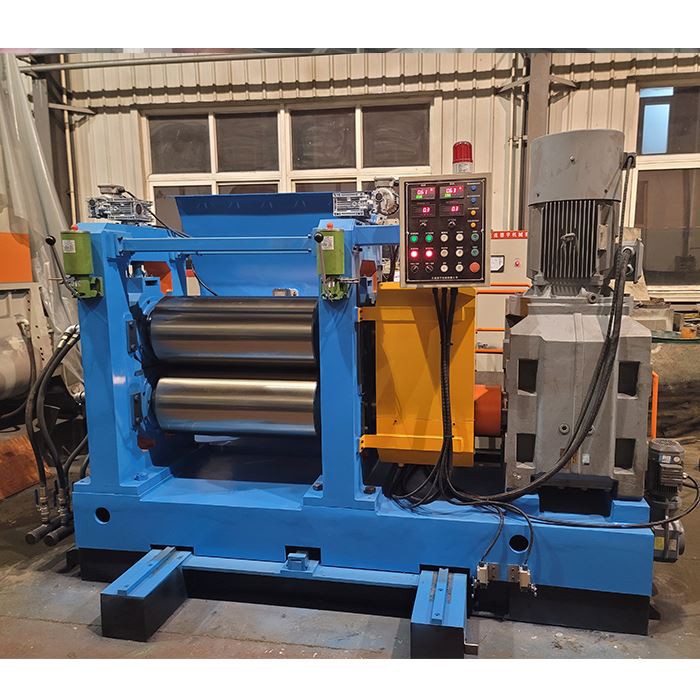
In addition to our Rubber Banbury Mixers, we also offer other related equipment such as Rubber Open Mill, Rubber Extruder Sheet Preforming Machine, and Batch Off Cooling Machine. These machines can work in conjunction with our mixers to provide a complete rubber processing solution.

If you're in the market for a Rubber Banbury Mixer or any of our other rubber processing equipment, we'd love to have a chat with you. We can help you choose the right equipment based on your specific rubber mixing needs. Don't hesitate to reach out and start a conversation about how we can improve your rubber processing operations.
References
- "Rubber Mixing Technology" by X. Wang
- "Handbook of Rubber Technology" edited by K. K. Chandra