
A rubber mixer is a crucial piece of equipment in the rubber processing industry, used for the mixing, blending, and homogenizing of rubber compounds with various additives. As a leading rubber mixer supplier, I understand the importance of each component in a rubber mixer and its specific functions. In this blog, I will delve into the key components of a rubber mixer and explain their roles in the rubber - mixing process.
1. Mixing Chamber
The mixing chamber is the heart of a rubber mixer. It is where the actual mixing of rubber and additives takes place. Constructed from high - strength and wear - resistant materials such as alloy steel, the mixing chamber can withstand the high pressures and frictional forces generated during the mixing process.
The shape and size of the mixing chamber are carefully designed. A well - designed chamber ensures efficient mixing by providing a proper flow path for the rubber compound. For example, some mixing chambers have a specific contour that promotes the movement of the rubber from the top to the bottom and back, facilitating thorough blending of the ingredients.
During the mixing process, the rubber and additives are loaded into the chamber. The chamber is then sealed to prevent the escape of heat and volatile substances. Heat is generated due to the mechanical work done on the rubber by the mixing elements, which helps in softening the rubber and improving its flowability, making it easier to incorporate the additives evenly.
2. Rotors
Rotors are another vital component of a rubber mixer. They are the rotating parts inside the mixing chamber that perform the actual mixing operation. There are different types of rotors, such as tangential rotors and intermeshing rotors.
Tangential rotors rotate independently of each other. They have a shearing action on the rubber compound as they pass by each other. This shearing force breaks down the rubber molecules and helps in dispersing the additives. The design of tangential rotors allows for a relatively large volume of rubber to be processed at once, making them suitable for high - volume production.
Intermeshing rotors, on the other hand, have a more complex design. They interlock with each other during rotation, providing a more intense and thorough mixing action. The intermeshing design creates a high - shear environment, which is particularly effective for incorporating fine additives and achieving a high level of dispersion in the rubber compound.
The speed and direction of the rotors can be adjusted according to the specific requirements of the rubber compound being mixed. For example, a higher rotor speed may be used for initial breakdown of the rubber, while a lower speed may be employed during the final stages of mixing to ensure a uniform compound.
3. Ram
The ram is a vertically moving component located at the top of the mixing chamber. Its main function is to apply pressure on the rubber compound inside the chamber. By applying pressure, the ram helps to force the rubber into contact with the rotors and the walls of the mixing chamber, ensuring that all parts of the rubber are effectively mixed.
The pressure exerted by the ram can be adjusted. Higher pressure is usually required for mixing more viscous rubber compounds or when a greater degree of dispersion is needed. The ram also helps to prevent the rubber from escaping from the top of the chamber during the mixing process, maintaining a closed - system environment.
4. Cooling System
A cooling system is essential for a rubber mixer. The mixing process generates a significant amount of heat due to the mechanical work and friction. Excessive heat can cause the rubber to degrade, change its properties, and even lead to scorching.
The cooling system is designed to remove the excess heat from the mixing chamber, rotors, and other components. There are different types of cooling systems, such as water - cooling and air - cooling. Water - cooling is more commonly used as it is more efficient in removing heat.
In a water - cooling system, water is circulated through channels in the mixing chamber and rotors. The water absorbs the heat from the components and then transfers it to a heat exchanger, where it is dissipated. The temperature of the cooling water can be controlled to maintain the desired temperature inside the mixing chamber, ensuring that the rubber compound is mixed under optimal conditions.
5. Control System
The control system of a rubber mixer is responsible for monitoring and controlling various parameters during the mixing process. It includes sensors, actuators, and a control panel.
Sensors are used to measure parameters such as temperature, pressure, rotor speed, and torque. These sensors provide real - time data to the control panel. For example, temperature sensors can detect if the temperature inside the mixing chamber is too high or too low, and then the control system can adjust the cooling system accordingly.
The control panel allows the operator to set and adjust the operating parameters of the rubber mixer. The operator can input the desired mixing time, rotor speed, ram pressure, etc. The control system then ensures that the mixer operates according to these settings. It also has safety features, such as emergency stop buttons, to prevent accidents in case of any abnormal conditions.
6. Discharge System
The discharge system is used to remove the mixed rubber compound from the mixing chamber after the mixing process is complete. There are different types of discharge systems, such as bottom - dump and side - dump systems.
In a bottom - dump system, the bottom of the mixing chamber opens, allowing the rubber compound to fall out under the influence of gravity. This type of system is simple and efficient for discharging large quantities of rubber.

A side - dump system, on the other hand, has a door on the side of the mixing chamber. The rubber compound is pushed out through this door by a mechanical device or by the pressure inside the chamber. Side - dump systems are often used when more precise control over the discharge process is required.
Our Product Offerings
As a rubber mixer supplier, we offer a wide range of rubber mixing equipment. For example, our Xk - 160 Two Roll Mill is a popular choice for small - scale rubber processing. It is a simple and cost - effective machine that can be used for preliminary mixing and refining of rubber compounds.
Our Rubber Open Mill is suitable for a variety of rubber mixing applications. It provides a good visual inspection of the mixing process and is easy to operate.
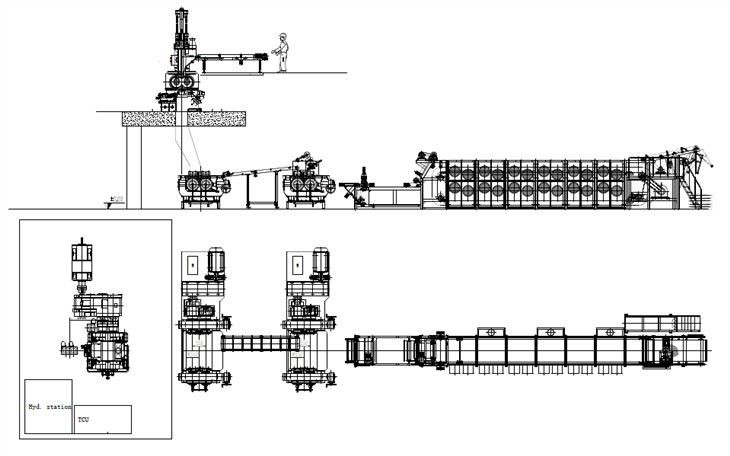
For large - scale production, our Rubber Mixing Line offers a complete solution. It integrates multiple rubber mixers and other auxiliary equipment, allowing for continuous and efficient production of rubber compounds.
Conclusion
In conclusion, each component of a rubber mixer plays a crucial role in the rubber - mixing process. The mixing chamber provides the space for mixing, the rotors perform the actual mixing operation, the ram applies pressure, the cooling system controls the temperature, the control system monitors and regulates the process, and the discharge system removes the mixed compound.
If you are in the rubber processing industry and are looking for high - quality rubber mixers, we are here to provide you with the best solutions. Our products are designed with the latest technology and high - quality materials to ensure efficient and reliable operation. Contact us for more information and to discuss your specific requirements. We look forward to the opportunity to work with you and contribute to the success of your rubber - processing business.
References
- "Rubber Technology" by Maurice Morton.
- "Handbook of Rubber Technology" by K. G. Naugle.