
How to Monitor the Operation Status of a Rubber Open Mill in Real - time?
As a well - established supplier of Rubber Open Mills, I understand the crucial role that real - time monitoring plays in the efficient and safe operation of these machines. In the rubber processing industry, a Rubber Open Mill is a fundamental piece of equipment used for mixing, masticating, and shearing rubber compounds. Ensuring its proper operation is not only essential for product quality but also for the safety of the operators and the overall productivity of the manufacturing process.
Importance of Real - time Monitoring
Real - time monitoring of a Rubber Open Mill provides several significant benefits. Firstly, it allows for early detection of potential issues. By continuously tracking various parameters such as temperature, speed, and power consumption, operators can identify abnormal behavior before it leads to a major breakdown. This proactive approach can save a significant amount of time and money that would otherwise be spent on costly repairs and production downtime.

Secondly, real - time monitoring helps in maintaining product quality. The quality of rubber compounds is highly dependent on the processing conditions during the mixing process. Any deviation from the optimal parameters can result in inconsistent product quality. With real - time monitoring, operators can make immediate adjustments to ensure that the rubber compounds are mixed to the desired specifications.
Finally, real - time monitoring enhances safety. Rubber Open Mills involve high - speed rotating rollers and can pose a risk to operators if not properly monitored. By keeping track of parameters such as roller clearance and emergency stop activation, the likelihood of accidents can be significantly reduced.
Key Parameters to Monitor
- Temperature
Temperature is one of the most critical parameters to monitor in a Rubber Open Mill. The mixing process generates a significant amount of heat, and excessive temperature can cause the rubber to degrade, leading to poor product quality. On the other hand, if the temperature is too low, the rubber may not be properly mixed.
We can install temperature sensors on the rollers and the mixing chamber to measure the temperature in real - time. These sensors can be connected to a monitoring system that alerts the operators if the temperature goes beyond the predefined limits. - Speed
The speed of the rollers affects the mixing efficiency and the quality of the rubber compounds. Different rubber formulations require different roller speeds for optimal mixing. By monitoring the roller speed in real - time, operators can ensure that the machine is operating at the correct speed for the specific rubber compound being processed.
Speed sensors can be used to measure the rotational speed of the rollers. These sensors can provide accurate data that can be used to adjust the speed of the drive motor if necessary. - Power Consumption
Power consumption is an indicator of the load on the Rubber Open Mill. An increase in power consumption may indicate that the machine is under excessive stress, which could be due to factors such as a blockage in the mixing chamber or a problem with the drive system.
By monitoring the power consumption in real - time, operators can detect such issues early and take appropriate action to prevent damage to the machine. Power meters can be installed to measure the electrical power consumed by the machine. - Roller Clearance
The roller clearance is another important parameter that affects the mixing process. The clearance between the rollers determines the thickness of the rubber sheet being processed and the degree of shearing. Incorrect roller clearance can result in uneven mixing and poor product quality.
Mechanical or electronic sensors can be used to measure the roller clearance in real - time. Operators can then adjust the clearance as needed to ensure optimal mixing.
Monitoring Systems
There are several types of monitoring systems available for Rubber Open Mills.
- PLC - based Monitoring Systems
Programmable Logic Controllers (PLCs) are widely used in industrial applications for monitoring and control. A PLC - based monitoring system can be configured to collect data from various sensors installed on the Rubber Open Mill, such as temperature sensors, speed sensors, and power meters.
The PLC can then process this data and display it on a control panel. It can also be programmed to send alerts to the operators if any of the monitored parameters go beyond the predefined limits. - SCADA Systems
Supervisory Control and Data Acquisition (SCADA) systems are more advanced monitoring systems that can provide a comprehensive view of the operation of the Rubber Open Mill. A SCADA system can collect data from multiple sensors and display it in a graphical format on a computer screen.
It can also store historical data for analysis and generate reports. SCADA systems can be integrated with other systems in the manufacturing plant, allowing for centralized monitoring and control. - Wireless Monitoring Systems
Wireless monitoring systems are becoming increasingly popular due to their flexibility and ease of installation. These systems use wireless sensors to collect data from the Rubber Open Mill and transmit it to a central monitoring station.
Wireless monitoring systems can be particularly useful in situations where it is difficult or expensive to install wired sensors.
Integration with Other Equipment
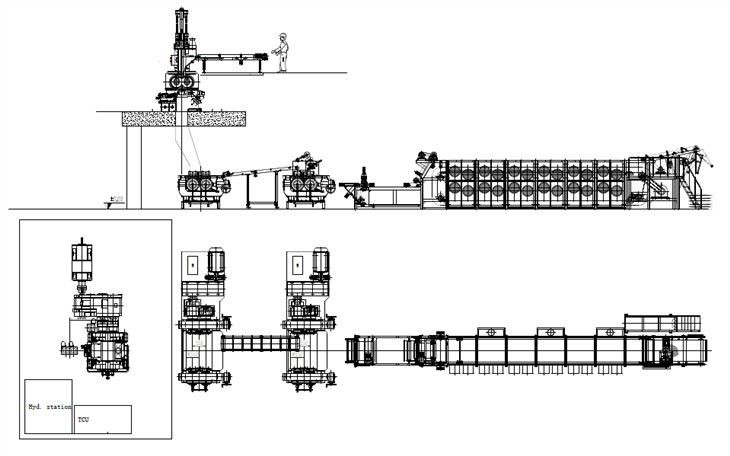
In a modern rubber processing plant, a Rubber Open Mill is often part of a larger production line. It is important to integrate the monitoring system of the Rubber Open Mill with the monitoring systems of other equipment, such as the Kneader Machine For Rubber Mixing, Rubber Mixing Line, and New Type Banbury Mixer.
By integrating the monitoring systems, operators can have a holistic view of the entire production process. For example, if the Rubber Open Mill is experiencing a problem, the integrated monitoring system can alert the operators of other equipment in the line to take appropriate action, such as reducing the feed rate or shutting down the upstream equipment.
Conclusion
Real - time monitoring of a Rubber Open Mill is essential for ensuring efficient operation, maintaining product quality, and enhancing safety. By monitoring key parameters such as temperature, speed, power consumption, and roller clearance, and using appropriate monitoring systems, operators can detect and address potential issues before they cause significant problems.
If you are in the market for a high - quality Rubber Open Mill or need assistance with real - time monitoring solutions, we are here to help. Our team of experts can provide you with the latest technology and customized solutions to meet your specific requirements. Contact us today to start a discussion about your rubber processing needs and explore how our products can benefit your business.
References
- "Rubber Processing Technology" by Michael Morton
- "Industrial Automation Handbook" by Thomas H. Lee
- Technical manuals of various Rubber Open Mill manufacturers.