
Hey there! As a supplier of 2 roll mills, I'm super excited to take you on a journey through how the feeding system in these machines works. 2 roll mills are pretty popular in the rubber and plastic industries, and understanding their feeding system is key to getting the most out of them.
Let's start with the basics. A 2 roll mill consists of two horizontally placed rolls that rotate towards each other. The feeding system is all about getting the raw materials onto these rolls in a smooth and efficient way.
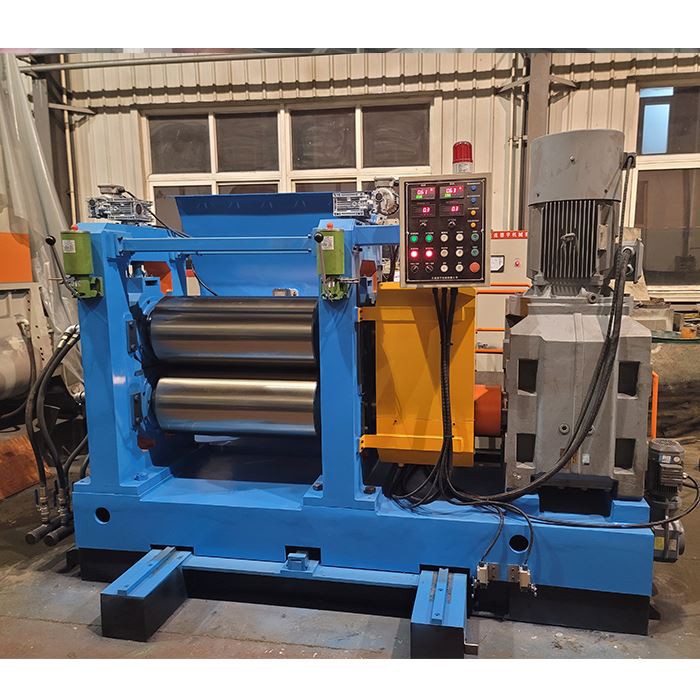

The Initial Loading
The first step in the feeding process is loading the raw materials. This can be in the form of rubber compounds, plastics, or other materials. Operators usually use a variety of methods to get the materials to the mill. Sometimes, they just manually place the materials on the top of the rolls. For larger - scale operations, there are hoppers and conveyor systems.
Hoppers are like big containers that hold the raw materials. They have an opening at the bottom that allows the materials to flow down towards the rolls. The size and shape of the hopper can be designed according to the type and quantity of the materials being processed. For example, if you're dealing with a sticky rubber compound, a hopper with a smooth interior surface can prevent the material from sticking and ensure a continuous flow.
Conveyor systems are another great option, especially when you need to move materials over a longer distance. They can be belt conveyors or screw conveyors. Belt conveyors are simple and can handle a wide range of materials. They move the materials from a storage area to the mill at a controlled speed. Screw conveyors, on the other hand, are better for handling powdery or granular materials. They use a rotating screw to push the materials towards the rolls.
Material Interaction with the Rolls
Once the materials reach the rolls, things start to get interesting. The two rolls rotate at different speeds, which creates a shearing action. This shearing is crucial for mixing and processing the materials.
As the materials come in contact with the rolls, they are pulled into the nip area - that's the small gap between the two rolls. The difference in the roll speeds causes the materials to be stretched and deformed. This helps in breaking down any large particles or agglomerates in the materials and also ensures a more uniform mixing.
For instance, in the rubber industry, when you're making a rubber compound, the raw rubber may have some large chunks or unevenly distributed additives. The shearing action in the 2 roll mill helps to break these chunks and distribute the additives evenly throughout the rubber.
Adjusting the Feeding Rate
Controlling the feeding rate is essential for the proper operation of the 2 roll mill. If you feed too much material at once, the mill may become overloaded, and the quality of the processed material may suffer. On the other hand, if you feed too little, the mill may not be working at its full capacity.
Most modern 2 roll mills come with adjustable feeding mechanisms. You can change the speed of the conveyor or the opening size of the hopper to control the amount of material being fed. Some mills even have sensors that can detect the load on the rolls and automatically adjust the feeding rate.
Let's say you're using a 2 roll mill to process a plastic compound. You start with a certain feeding rate based on the recommended settings. But as you notice that the rolls are starting to slow down a bit, indicating an overload, you can reduce the feeding rate by adjusting the conveyor speed.
Complementary Equipment
In a complete rubber or plastic processing line, the 2 roll mill doesn't work alone. There are other pieces of equipment that are closely related to the feeding system and the overall operation of the mill.
One such piece of equipment is the Rubber Extruder Sheet Preforming Machine. This machine can be used to pre - shape the raw materials before they are fed into the 2 roll mill. It can produce sheets of a certain thickness and width, which can then be easily fed into the mill. This pre - forming step can improve the efficiency of the 2 roll mill and also ensure a more consistent quality of the final product.
Another important equipment is the Rubber Banbury Mixer. Before the materials reach the 2 roll mill, they may be initially mixed in a Banbury mixer. This mixer can handle large quantities of materials and provides a high - intensity mixing. The pre - mixed materials from the Banbury mixer can then be fed into the 2 roll mill for further processing.
The Batch Off Cooling Machine is also a key part of the process. After the materials are processed in the 2 roll mill, they need to be cooled down. The batch off cooling machine helps in this process by rapidly cooling the processed materials, preventing them from sticking together and ensuring a proper shape.
Maintenance of the Feeding System
To keep the feeding system of the 2 roll mill working smoothly, regular maintenance is a must.
For hoppers, you need to clean them regularly to prevent any build - up of materials. If there's a build - up, it can block the flow of materials and affect the feeding rate. You can use appropriate cleaning agents and tools to remove any stubborn residues.
Conveyor belts need to be inspected for wear and tear. If the belt is damaged, it can cause the materials to spill or not move properly. You may need to replace the belt if it's too worn out. Screw conveyors also need to be checked for any blockages or damage to the screw.
The rolls themselves also require maintenance. You need to keep them clean and lubricated. Any scratches or dents on the rolls can affect the shearing action and the quality of the processed materials.
Conclusion
So, there you have it - a detailed look at how the feeding system in a 2 roll mill works. From the initial loading of the raw materials to the interaction with the rolls, and the role of complementary equipment, every step is important in ensuring a smooth and efficient operation.
If you're in the market for a 2 roll mill or have any questions about the feeding system or the overall operation of these machines, don't hesitate to reach out. We're here to help you make the best choice for your business and ensure that you get the most out of your investment. Whether you're a small - scale manufacturer or a large industrial player, we can provide you with the right solutions.
References
- "Rubber Processing Technology" by Maurice Morton
- "Plastics Processing Machinery" by Christopher Rauwendaal