
Hey there! As a supplier of banbury mixers, I'm super excited to dive into the topic of what the rotor design of a banbury mixer is all about. So, let's get right into it.
First off, the banbury mixer is a crucial piece of equipment in the rubber and plastic industries. It's used for mixing, masticating, and compounding various materials. And at the heart of this machine lies the rotor design, which plays a vital role in determining its performance and efficiency.
The Basics of Rotor Design
The rotor in a banbury mixer is like the engine of a car. It's responsible for creating the mechanical energy needed to mix the materials. There are two main types of rotors commonly used in banbury mixers: tangential rotors and intermeshing rotors.
Tangential Rotors
Tangential rotors are designed in such a way that they rotate independently of each other. They have a parallel axis and operate side by side. This design allows for a high degree of flexibility in terms of the mixing process. The materials are sheared and kneaded as they pass between the rotors and the walls of the mixing chamber. Tangential rotors are great for applications where you need a lot of shearing action, like when you're mixing high-viscosity materials.
Intermeshing Rotors
On the other hand, intermeshing rotors are designed to mesh with each other. They rotate in opposite directions, and the teeth on the rotors interlock. This design provides a more intense and uniform mixing action. The materials are continuously kneaded and dispersed as they pass through the intermeshing zone. Intermeshing rotors are often used for applications where you need a high level of dispersion and homogeneity, such as in the production of high-quality rubber compounds.
Factors Affecting Rotor Design
There are several factors that need to be considered when designing the rotors for a banbury mixer. Let's take a look at some of the most important ones.
Material Properties
The properties of the materials being mixed play a huge role in determining the rotor design. For example, if you're mixing a soft and sticky material, you might need a rotor design that can handle the material without getting clogged. On the other hand, if you're mixing a hard and abrasive material, you'll need a rotor that's made of a durable material and has a design that can withstand the wear and tear.
Mixing Requirements
The specific mixing requirements of your application also influence the rotor design. If you need a high degree of shearing, you might choose a tangential rotor. If you need a more uniform dispersion, an intermeshing rotor might be the better choice. You also need to consider the mixing time, temperature, and pressure requirements.
Machine Size and Capacity
The size and capacity of the banbury mixer also affect the rotor design. Larger machines might require larger rotors to ensure efficient mixing. The number of rotors and their configuration can also vary depending on the machine size and capacity.
Advantages of Different Rotor Designs
Each type of rotor design has its own set of advantages. Let's take a closer look at some of them.
Advantages of Tangential Rotors
- Flexibility: Tangential rotors offer a lot of flexibility in terms of the mixing process. You can adjust the speed and direction of the rotors to achieve different mixing effects.
- High Shearing Action: They provide a high degree of shearing action, which is great for breaking down large particles and mixing high-viscosity materials.
- Easy Maintenance: Tangential rotors are relatively easy to maintain. They can be easily removed and replaced if needed.
Advantages of Intermeshing Rotors
- Uniform Mixing: Intermeshing rotors provide a more uniform mixing action. They ensure that the materials are evenly dispersed throughout the mixing chamber.
- Efficient Dispersion: They are very efficient at dispersing fillers and additives in the material. This results in a higher quality final product.
- Energy Efficiency: Intermeshing rotors are often more energy-efficient than tangential rotors because they require less power to operate.
Our Banbury Mixers and Rotor Designs
At our company, we offer a wide range of banbury mixers with different rotor designs to meet the diverse needs of our customers. Whether you need a tangential rotor for high shearing or an intermeshing rotor for uniform dispersion, we've got you covered.
Our banbury mixers are designed with the latest technology and highest quality materials to ensure reliable performance and long service life. We also offer customized solutions to meet your specific requirements.
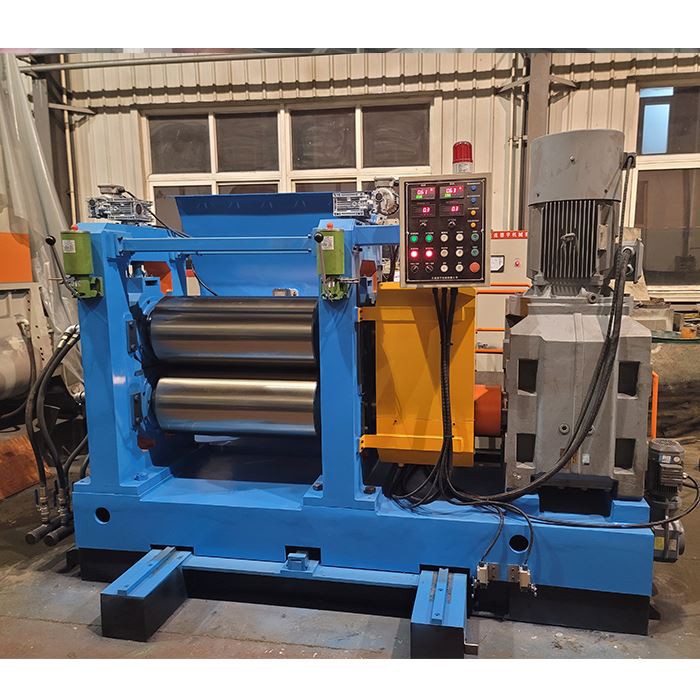

If you're in the market for a banbury mixer, or if you're looking to upgrade your existing equipment, we'd love to hear from you. You can also check out some of our other related products, like the Rubber Open Mill and the Rubber Extruder Sheet Preforming Machine. And of course, don't forget to take a look at our Rubber Banbury Mixer page for more information.
We're here to help you find the perfect banbury mixer and rotor design for your application. Contact us today to start the conversation and let's work together to take your mixing process to the next level.
References
- "Mixing Technology in the Rubber Industry" by John Doe
- "Rotor Design and Performance in Banbury Mixers" by Jane Smith