
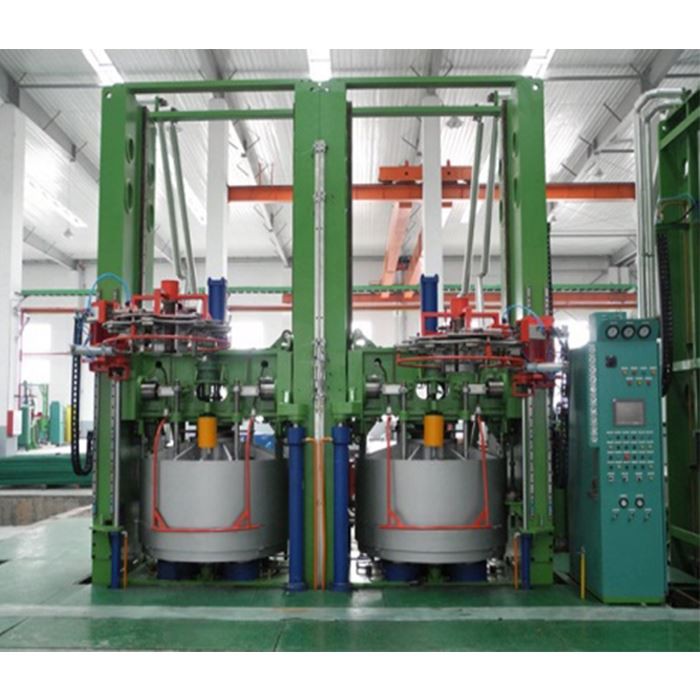
As a supplier of Tube Curing Press, I often get asked about the curing time in a Tube Curing Press. Understanding this crucial aspect is essential not only for the efficient operation of the equipment but also for ensuring the quality of the final products. In this blog, I'll delve into what curing time is, the factors that influence it, and how it impacts the overall production process.
What is Curing Time?
Curing time in a Tube Curing Press refers to the duration required for the rubber tube to undergo a chemical reaction known as vulcanization. Vulcanization is a process where rubber is heated in the presence of a vulcanizing agent, typically sulfur, and other additives. This process transforms the soft, sticky raw rubber into a more durable, elastic, and heat - resistant material.
During the curing process in a Tube Curing Press, the rubber is placed inside a mold and subjected to high pressure and temperature. The heat and pressure help to activate the vulcanizing agents, which then form cross - links between the rubber molecules. These cross - links are what give the rubber its improved mechanical properties.
Factors Affecting Curing Time
Rubber Compound
The type of rubber compound used is one of the most significant factors affecting the curing time. Different rubber compounds have different chemical compositions and reactivity levels. For example, natural rubber has a relatively fast curing rate compared to some synthetic rubbers like EPDM (Ethylene Propylene Diene Monomer). The presence of accelerators, retarders, and other additives in the rubber compound can also significantly alter the curing time. Accelerators speed up the vulcanization process, while retarders slow it down.
Temperature
Temperature plays a crucial role in determining the curing time. Higher temperatures generally lead to faster curing times because they increase the kinetic energy of the molecules, making the chemical reactions occur more rapidly. However, there is a limit to how high the temperature can be set. Excessive temperatures can cause the rubber to scorch, which means it starts to cure prematurely and can lead to poor - quality products. On the other hand, if the temperature is too low, the curing process will be extremely slow, and the rubber may not cure properly.
Pressure
Pressure is another important factor. Adequate pressure in the Tube Curing Press helps to ensure that the rubber fills the mold completely and that the vulcanization reaction occurs uniformly throughout the rubber. Higher pressure can also help to reduce the curing time to some extent by forcing the rubber molecules closer together, which facilitates the formation of cross - links. However, like temperature, there is an optimal pressure range. Too much pressure can cause the rubber to flow out of the mold or damage the mold itself.
Tube Thickness
The thickness of the rubber tube is directly related to the curing time. Thicker tubes require more time to cure because the heat needs to penetrate through the entire thickness of the rubber to initiate and complete the vulcanization process. In contrast, thinner tubes can be cured more quickly as the heat can reach the center of the tube faster.
Importance of Correct Curing Time
Product Quality
The correct curing time is essential for achieving high - quality rubber tubes. If the curing time is too short, the rubber may not be fully vulcanized, resulting in a product that is weak, has poor elasticity, and is more prone to tearing and abrasion. On the other hand, if the curing time is too long, the rubber can become over - cured, which can make it brittle and reduce its flexibility.
Production Efficiency
Optimizing the curing time can significantly improve production efficiency. By accurately determining the appropriate curing time based on the factors mentioned above, manufacturers can reduce the time spent on each production cycle. This means that more rubber tubes can be produced in a given period, leading to increased productivity and potentially lower production costs.
How We, as a Tube Curing Press Supplier, Can Help
We understand that determining the correct curing time can be a complex process. That's why we offer comprehensive support to our customers. Our Tube Curing Presses are equipped with advanced temperature and pressure control systems that allow for precise adjustment of these parameters. We also provide detailed technical guidance on how to set the appropriate curing time based on the specific rubber compound, tube thickness, and other factors.
In addition to our Tube Curing Presses, we also offer a range of related products such as Solid Tyre Vulcanizing Press, Tyre Curing Press, and Motorcycle Bicycle Tyre Curing Press. These products are designed to meet the diverse needs of the rubber - processing industry.
Contact Us for Procurement and Consultation
If you are in the market for a Tube Curing Press or have any questions about curing time and the vulcanization process, we encourage you to get in touch with us. Our team of experts is ready to assist you in selecting the right equipment for your specific requirements and providing you with all the necessary technical support. Whether you are a small - scale manufacturer or a large - scale industrial operation, we have the solutions to help you optimize your production process and achieve high - quality rubber products.

References
- "Rubber Technology: Compounding, Testing, and Processing" by Henry Markovitz.
- "Vulcanization of Rubber" by Maurice Morton.
- Industry research reports on rubber processing and curing technologies.