
Hey everyone! I'm coming at you from the world of rubber processing as a supplier of Rubber Banbury Mixers. Today, I wanna chat about the features of modern Rubber Banbury Mixers compared to the traditional ones. It's gonna be an interesting ride, so buckle up!
1. Design and Structure
Let's start with the design and structure. Traditional Rubber Banbury Mixers were often bulky and had a somewhat rigid design. They were built like tanks, which was great for durability, but it also meant they took up a lot of floor space in a factory. You'd walk into a workshop, and there'd be these huge, imposing machines that were a real challenge to move around or re - configure.
On the other hand, modern Rubber Banbury Mixers have a more compact and modular design. We've really made strides in engineering to pack all the necessary functionality into a smaller footprint. This is a game - changer for factories with limited space. You can now fit more equipment in the same area, which means you can increase your production capacity without having to expand your factory.
Another aspect of the modern design is the ease of maintenance. Traditional mixers had complex internal structures that made it a real headache to access and repair parts. You'd need a team of technicians with specialized tools just to get to the heart of the machine. But modern mixers are designed with accessibility in mind. Components are more readily available, and there are fewer hard - to - reach areas. This not only reduces the downtime for maintenance but also cuts down on the overall cost of upkeep.
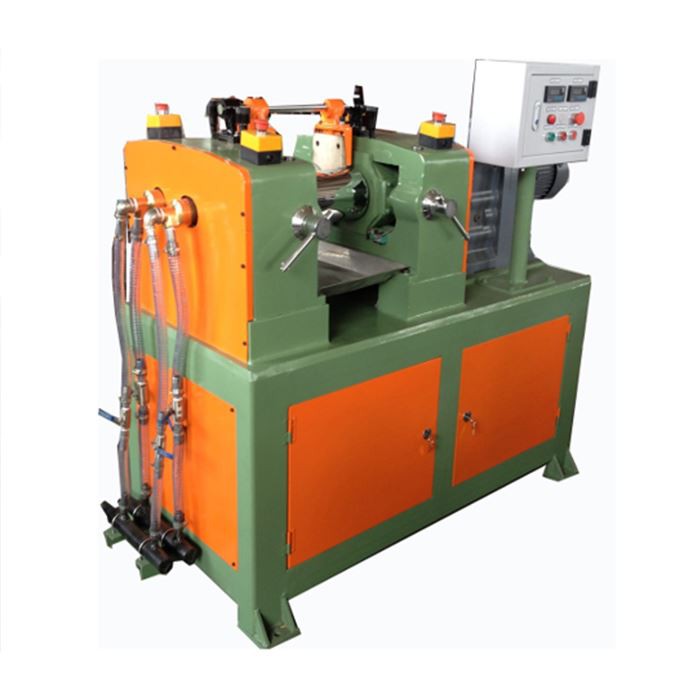

2. Mixing Efficiency
Mixing efficiency is where the difference between modern and traditional Rubber Banbury Mixers really shines. Traditional mixers relied on relatively simple mixing mechanisms. They'd use basic rotors that would turn at a fixed speed, and the mixing process was often a slow and labor - intensive affair. It could take a long time to achieve a homogeneous mixture of rubber and other additives, and there was always a risk of uneven mixing.
Modern mixers, however, come equipped with advanced rotor designs. These rotors are engineered to create a more turbulent flow within the mixing chamber. They can rotate at variable speeds, which allows for a more precise control of the mixing process. With the ability to adjust the speed according to the specific requirements of the rubber compound, we can achieve a much more uniform mixture in a shorter amount of time.
In addition, modern mixers often feature advanced temperature control systems. Temperature plays a crucial role in the rubber mixing process. If the temperature is too high, the rubber can degrade; if it's too low, the additives may not disperse properly. Traditional mixers had limited temperature control capabilities, which meant that achieving the ideal temperature was more of a guess - and - check game. Modern mixers, on the other hand, can maintain a consistent temperature throughout the mixing process, ensuring optimal results.
3. Automation and Control
Automation is one of the biggest advantages of modern Rubber Banbury Mixers. Traditional mixers were largely manual operations. Operators had to rely on their experience and judgment to control the various parameters of the mixing process, such as the speed, temperature, and mixing time. This led to a lot of variability in the final product quality, as different operators might have different techniques.
Modern mixers are equipped with sophisticated control systems that can automate many aspects of the mixing process. These systems use sensors to monitor and adjust the parameters in real - time. For example, if the temperature in the mixing chamber starts to deviate from the set point, the control system can automatically adjust the heating or cooling mechanism to bring it back to the desired level.
The automation also extends to the feeding and discharging processes. In traditional mixers, operators had to manually load the raw materials into the mixing chamber and then remove the finished compound. This was not only time - consuming but also physically demanding. Modern mixers can be integrated with automated feeding and discharging systems. Raw materials can be precisely metered and fed into the mixer, and the finished compound can be quickly and efficiently removed, reducing the need for manual labor and increasing the overall productivity.
4. Energy Efficiency
Energy consumption is a major concern for any manufacturing operation, and rubber processing is no exception. Traditional Rubber Banbury Mixers were notorious for being energy - hogs. They had large motors that ran at high power continuously, even when the mixing process didn't require full - throttle operation. This led to high electricity bills and a significant environmental impact.
Modern mixers are designed with energy efficiency in mind. We've developed new motor technologies that can adjust the power consumption according to the actual load. For example, when the mixer is idle or operating at a low - intensity stage, the motor can run at a reduced power level, saving energy without sacrificing performance.
In addition, modern mixers often use more efficient heating and cooling systems. Traditional mixers used large amounts of energy to heat the mixing chamber and then had to use additional energy to cool it down. Modern systems are designed to recycle heat and use more energy - efficient refrigerants, which further reduces the overall energy consumption.
5. Safety Features
Safety is always a top priority in any industrial setting, and modern Rubber Banbury Mixers have come a long way in this regard compared to their traditional counterparts. Traditional mixers had limited safety features. Operators were often exposed to moving parts, high - temperature surfaces, and potentially hazardous chemicals. There were few safeguards in place to prevent accidents, and when an accident did occur, the consequences could be severe.
Modern mixers are equipped with a wide range of safety features. They have protective guards around all moving parts to prevent operators from coming into contact with them. There are also emergency stop buttons that can quickly shut down the machine in case of an emergency. In addition, modern mixers have advanced ventilation systems to remove any fumes or dust generated during the mixing process, protecting the health of the operators.
Related Equipment
If you're in the rubber processing industry, you might also be interested in other related equipment. For example, an Internal Mixer is a great addition to your production line. It can work in conjunction with the Rubber Banbury Mixer to further refine the rubber compound. And if you're looking for a smaller - scale mixing solution for research or testing purposes, a Lab Open Mill is a fantastic option. After the mixing process, a Batch Off can help you handle and store the finished rubber compound more efficiently.
Conclusion
In conclusion, the features of modern Rubber Banbury Mixers offer a significant upgrade over traditional ones. From the more compact design and improved mixing efficiency to the advanced automation, energy efficiency, and safety features, modern mixers are a great investment for any rubber processing operation. If you're in the market for a Rubber Banbury Mixer or any of the related equipment, I encourage you to get in touch with us. We can help you find the perfect solution for your specific needs and ensure that you get the most out of your investment. Let's start a conversation and see how we can take your rubber processing to the next level!
References
- "Handbook of Rubber Technology" by A. Y. Coran
- "Rubber Mixing Technology" by W. Hofmann