
Hey there! As a supplier of rubber mixers, I've seen firsthand how the pressure inside the mixing chamber can make or break the mixing process. In this blog, I'm gonna dive deep into how this pressure impacts everything from the quality of the rubber to the efficiency of the machine.
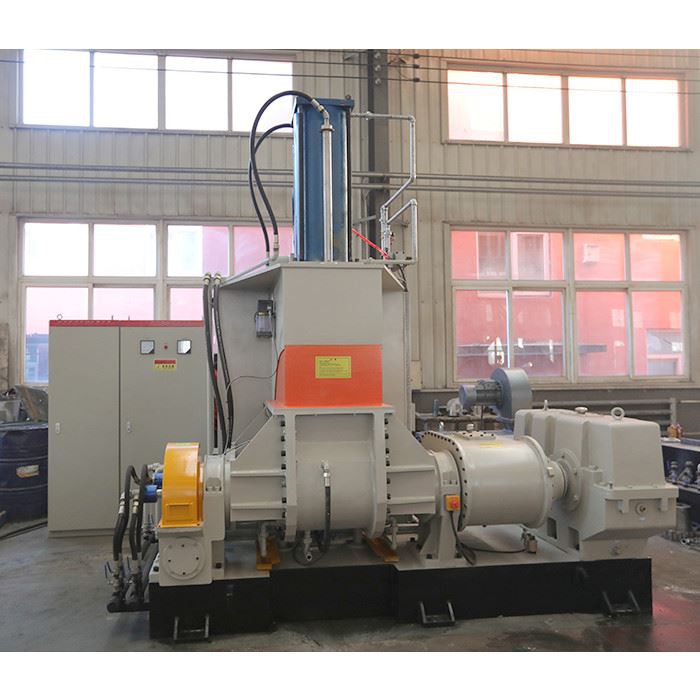
Let's start with the basics. The mixing chamber is where all the action happens. It's where raw rubber, along with various additives like fillers, plasticizers, and curing agents, are combined to create a homogeneous mixture. The pressure inside this chamber plays a crucial role in ensuring that these components are properly blended.

One of the most significant effects of pressure is on the dispersion of additives. When the pressure is right, it helps to break down the agglomerates of additives, allowing them to spread evenly throughout the rubber matrix. This is super important because uneven dispersion can lead to inconsistent properties in the final rubber product. For example, if the filler isn't evenly distributed, the rubber might have weak spots or different levels of hardness in different areas.
High pressure can also enhance the wetting of the additives by the rubber. When the rubber can effectively wet the additives, it forms a better bond between them. This improves the overall mechanical properties of the rubber, such as its strength and elasticity. Think of it like making a cake. If the ingredients aren't properly mixed and wet, the cake won't turn out right. Similarly, in rubber mixing, proper wetting under the right pressure is key to a high - quality end product.
Now, let's talk about the flow behavior of the rubber inside the chamber. Pressure affects how the rubber moves and flows during the mixing process. Higher pressure can increase the shear forces acting on the rubber. Shear forces are like a kind of "stirring" action that helps to mix the components more thoroughly. When the shear forces are sufficient, they can break down the large rubber molecules and re - arrange them in a more uniform way. This not only improves the mixing but also can enhance the processability of the rubber later on.
However, it's not all about high pressure. Too much pressure can have some negative impacts. For instance, excessive pressure can generate a lot of heat. Rubber is sensitive to heat, and if the temperature rises too high, it can start to degrade. This can lead to a loss of the rubber's desirable properties, such as its elasticity and resistance to wear. Moreover, high - pressure conditions can also put a lot of stress on the mixing equipment itself. It can cause premature wear and tear on the mixing blades, shafts, and other components. This means more maintenance and replacement costs, which can eat into your profits.
On the other hand, if the pressure is too low, the mixing might not be effective. The additives won't be dispersed well, and the rubber won't be properly wetted. This can result in a rubber mixture that doesn't meet the required quality standards. The final product might have poor mechanical properties and might not perform as expected in its intended application.
So, how do we find the right pressure? Well, it depends on several factors. The type of rubber being mixed is one of the main factors. Different types of rubber, like natural rubber, synthetic rubber, or silicone rubber, have different viscosities and chemical properties. These properties determine how they respond to pressure during the mixing process. For example, a more viscous rubber might require higher pressure to achieve good mixing compared to a less viscous one.
The type and amount of additives also play a role. If you're using a large amount of additives or additives with a high density, you might need to adjust the pressure accordingly. Additionally, the design of the mixing chamber and the mixing equipment itself can influence the optimal pressure. Some mixing chambers are designed to work better at certain pressure ranges, and using the right pressure can maximize the efficiency of the machine.
At our company, we offer a range of rubber mixing machines that are designed to handle different pressure requirements. For example, our Rubber Extruder Sheet Preforming Machine is a great option for those who need to mix rubber with a specific pressure profile for sheet preforming. It can maintain a stable pressure inside the chamber to ensure consistent mixing results.
Our Kneader Machine For Rubber Mixing is another excellent choice. It can generate the right amount of pressure and shear forces to mix rubber and additives thoroughly. The kneading action under the right pressure helps to achieve a high - quality rubber mixture.
And then there's our Twin Screw Rubber Extruder. This machine can precisely control the pressure inside the chamber during the extrusion process. It's ideal for those who need to produce rubber products with consistent properties.
In conclusion, the pressure inside the mixing chamber is a critical factor in the rubber mixing process. It affects the dispersion of additives, the wetting of components, the flow behavior of the rubber, and ultimately, the quality of the final product. Finding the right pressure is a balance between achieving good mixing results and avoiding negative effects like heat - induced degradation and equipment damage.
If you're in the market for a rubber mixer or need more information about how pressure affects the mixing process, don't hesitate to reach out. We're here to help you find the best solution for your rubber mixing needs. Whether you're a small - scale producer or a large - scale manufacturer, we've got the expertise and the equipment to support you.
References
- "Rubber Technology: Compounding, Processing, and Testing" by Werner Hofmann
- "Handbook of Rubber Technology" edited by Maurice Morton