
Hey there! As a supplier of rubber mixers, I've seen firsthand how the geometry of a mixer can have a huge impact on the rubber mixing process. In this blog post, I'm gonna break down what those impacts are and why they matter to you if you're in the rubber industry.
First off, let's talk about what we mean by mixer geometry. The geometry of a rubber mixer refers to its physical shape and design, including things like the size and shape of the mixing chamber, the configuration of the rotors, and the way the mixer is set up. All these factors can affect how the rubber is mixed, and ultimately, the quality of the final product.
One of the most important aspects of mixer geometry is the mixing chamber. The size and shape of the chamber can determine how much rubber can be mixed at once and how well the ingredients are distributed. For example, a larger chamber can handle more rubber, but it might not mix the ingredients as thoroughly as a smaller one. On the other hand, a smaller chamber can provide more intense mixing, but it might not be suitable for large - scale production.
Let's take a look at some common types of rubber mixers and how their geometries influence the mixing process.
Banbury Mixer
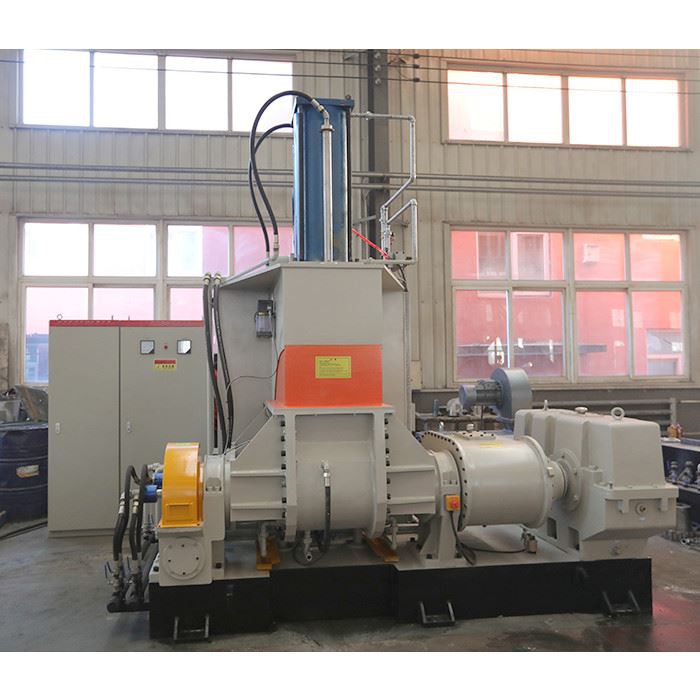
The New Type Banbury Mixer is a well - known type of rubber mixer. It typically has a large, oval - shaped mixing chamber with two counter - rotating rotors. The rotors are designed in a specific geometry, often with helical or cam - like shapes. This design allows for high - intensity mixing. The counter - rotating action of the rotors creates a shearing force that breaks down the rubber molecules and disperses the additives evenly. The oval shape of the chamber helps to keep the rubber in constant motion, ensuring that all parts of the batch are mixed thoroughly.
However, the large size of the Banbury mixer's chamber can sometimes lead to issues. If the batch size is too small, the rubber might not be mixed effectively because there isn't enough material to fill the chamber properly. And since it's a batch - type mixer, there can be some variation between batches if the mixing conditions aren't carefully controlled.
Twin Screw Rubber Extruder
The Twin Screw Rubber Extruder has a different geometry compared to the Banbury mixer. It consists of two parallel screws inside a barrel. The screws can be either co - rotating or counter - rotating. The geometry of the screws is crucial. They have different sections with varying pitch and flight depth.
In the feeding section, the screws are designed to convey the rubber and additives into the extruder. As the material moves along the barrel, the screws start to mix and knead the rubber. The co - rotating twin - screw extruders are great for distributive mixing, which means they spread the additives evenly throughout the rubber matrix. Counter - rotating twin - screw extruders, on the other hand, are more effective at dispersive mixing, breaking down agglomerates of additives.
One of the advantages of the twin - screw extruder's geometry is that it can provide continuous mixing. This means a more consistent product quality compared to batch - type mixers. But it also requires a more precise control of the feeding rate and screw speed to ensure optimal mixing.
Kneader Machine For Rubber Mixing
The Kneader Machine For Rubber Mixing has a unique geometry. It usually has a U - shaped mixing chamber with two sigma - shaped blades. The sigma blades rotate in opposite directions and perform a kneading action on the rubber. This kneading action is very effective at mixing high - viscosity rubbers.
The U - shaped chamber helps to keep the rubber in the mixing zone, and the sigma blades can reach all parts of the chamber. However, the kneader is generally more suitable for small - to medium - scale production. The design can make it a bit difficult to clean, and if the mixing time is not properly adjusted, there can be over - mixing or under - mixing of the rubber.
Now, let's talk about how the mixer geometry affects the quality of the rubber product.
Dispersion of Additives
The right mixer geometry is essential for proper dispersion of additives such as fillers, pigments, and curatives. If the additives aren't dispersed evenly, it can lead to inconsistent properties in the final rubber product. For example, if the carbon black (a common filler in rubber) isn't dispersed well, the rubber might have uneven hardness or strength. A mixer with a good geometry, like the Banbury mixer or the twin - screw extruder, can break down the agglomerates of additives and distribute them uniformly throughout the rubber.

Viscosity and Plasticity
The geometry of the mixer also affects the viscosity and plasticity of the rubber. During the mixing process, the rubber is subjected to shear forces. Different mixer geometries generate different levels of shear. Higher shear forces can break down the rubber molecules, reducing its viscosity and increasing its plasticity. This is important because it makes the rubber easier to process in subsequent steps like molding or extrusion.
Temperature Control
Mixer geometry can influence temperature control during the mixing process. Some mixers, like the Banbury mixer, generate a lot of heat due to the high - intensity mixing. The chamber design can affect how well this heat is dissipated. If the heat isn't removed properly, it can cause premature curing of the rubber or degradation of the additives. On the other hand, the twin - screw extruder can be better at controlling the temperature because it has a longer barrel, which allows for more efficient cooling.
In conclusion, the geometry of a rubber mixer plays a vital role in the rubber mixing process. Different mixer geometries offer different advantages and disadvantages, and the choice of mixer depends on your specific production requirements, such as batch size, product quality, and production volume.
If you're in the rubber industry and looking for a reliable rubber mixer, we're here to help. We understand that choosing the right mixer can be a challenge, but with our expertise and a wide range of mixer options, we can assist you in finding the perfect solution for your needs. Whether you need a high - intensity Banbury mixer for large - scale production or a precise twin - screw extruder for continuous mixing, we've got you covered. Don't hesitate to contact us for a consultation and let's start a conversation about how we can improve your rubber mixing process.
References
- Bridgestone, "Fundamentals of Rubber Mixing".
- Goodyear, "Influence of Mixer Design on Rubber Compounding".
- Michelin, "Advanced Rubber Mixing Technologies".